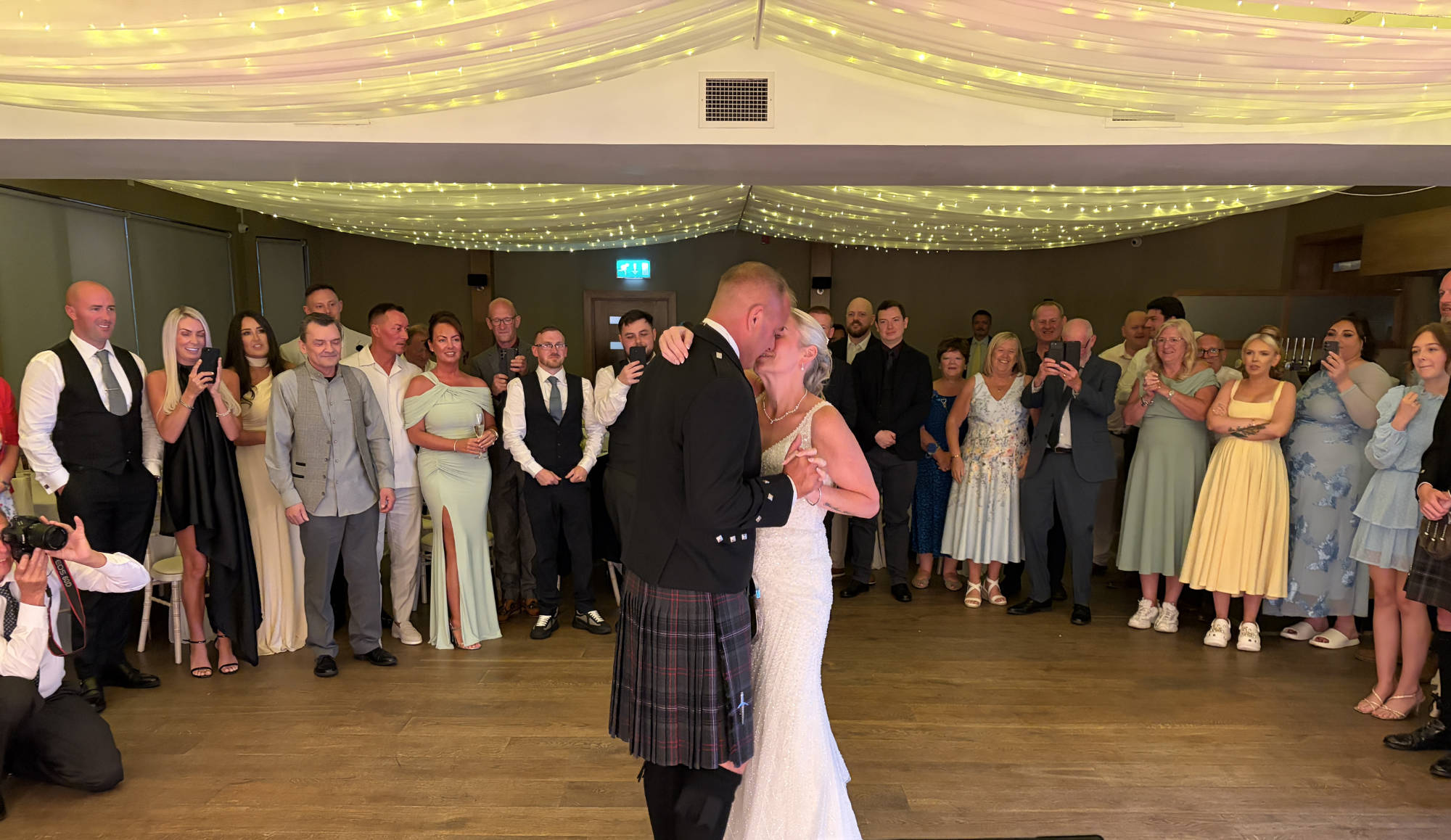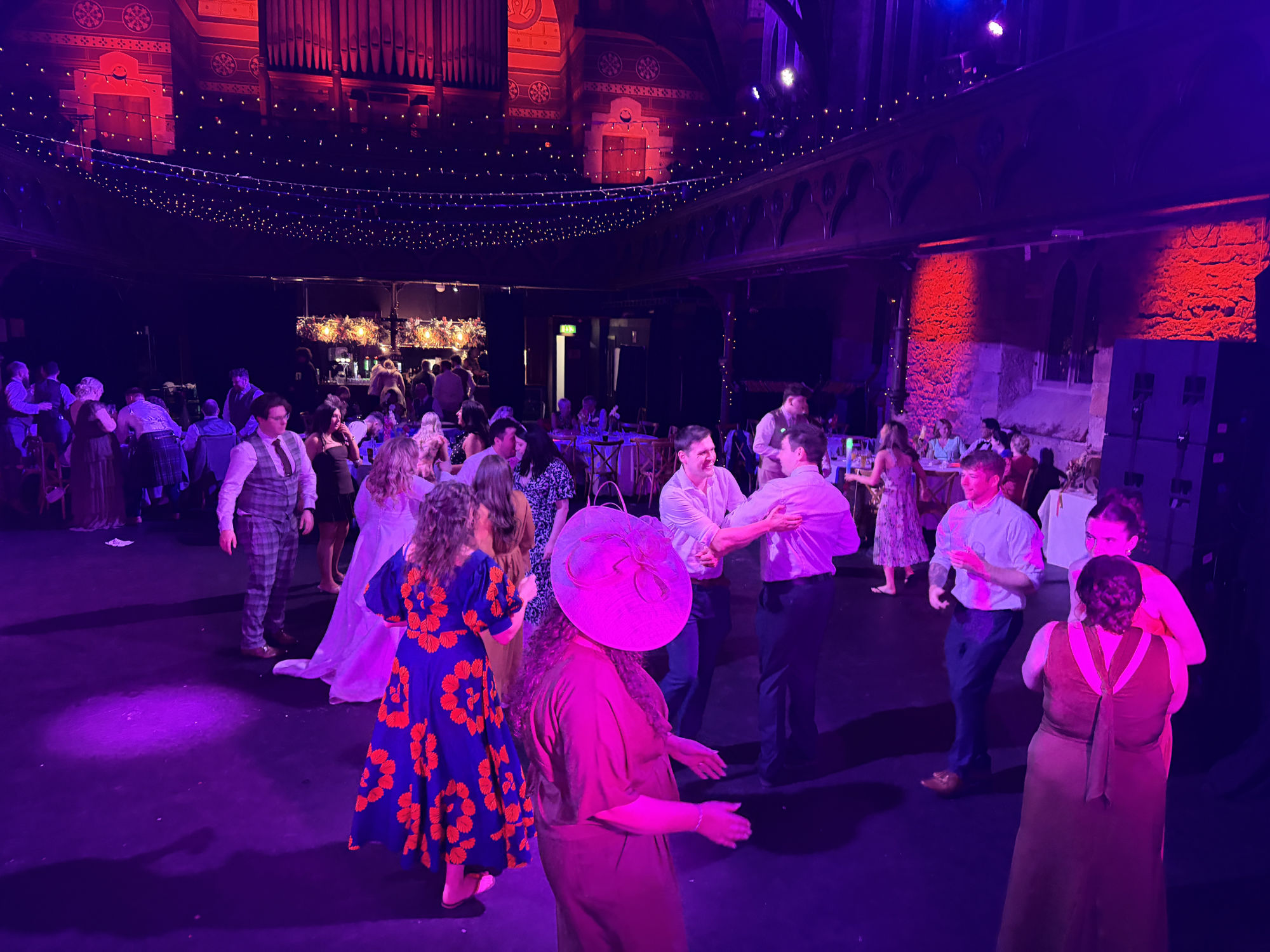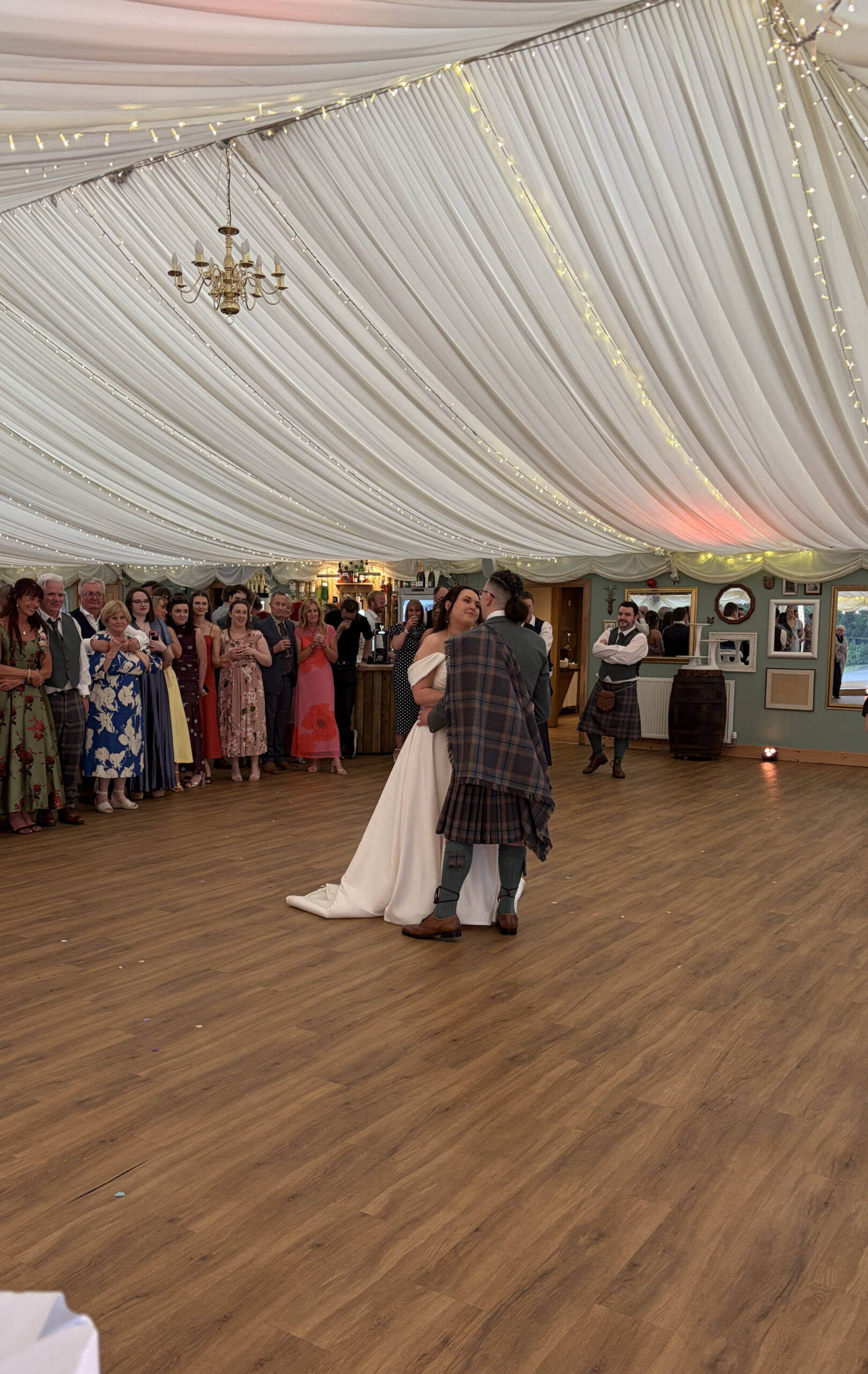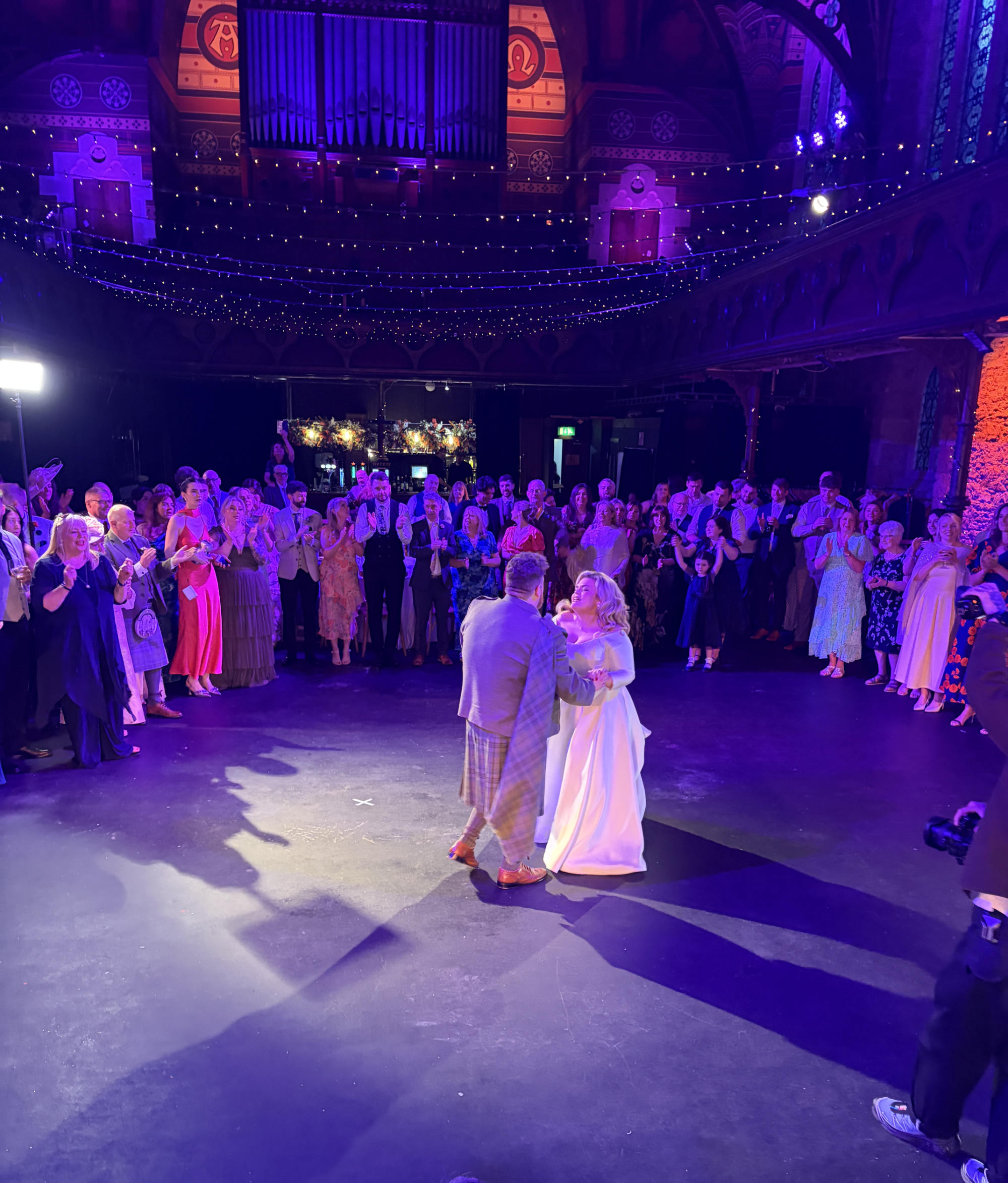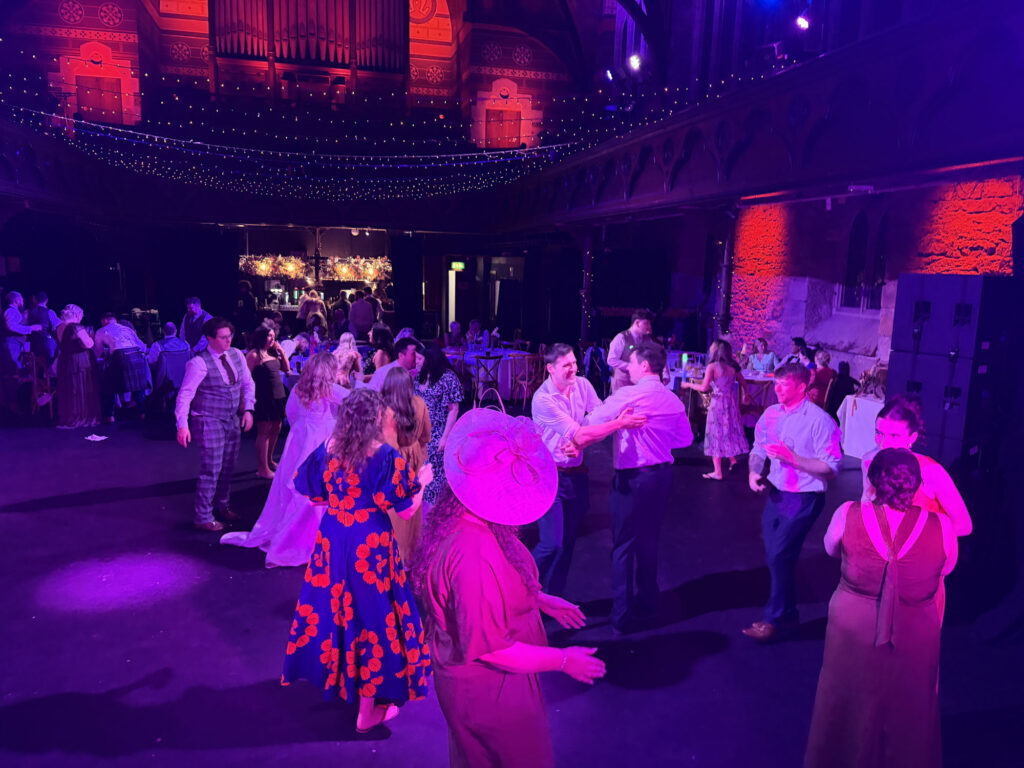
From raw footage to reel-worthy content, here’s what I’ve learned along the way.
Why I Decided to Start Vlogging My Weddings
I’ve been DJing weddings across the West of Scotland for years, and like most DJs, my content game was pretty much limited to a few photos and the odd Facebook post. But I kept noticing something, couples were booking suppliers they felt they knew. Not just suppliers with good reviews, but ones they’d watched, listened to, and got a vibe from before ever making an enquiry.
That got me thinking. I turn up to some incredible weddings, I play to packed dance floors! No one sees the energy in that room, the reactions, the first dance that gave everyone goosebumps. All that magic just vanishes the moment the lights come up and the night ends.
I started looking at what other wedding suppliers were doing online, photographers sharing behind the scenes reels, videographers posting emotional highlights, venues showing off their spaces in ways that made you feel something. And here I was, a DJ who creates some of the most memorable moments of the entire day, with virtually nothing to show for it online.
That felt like a missed opportunity. Couples planning their wedding are spending hours scrolling through Instagram and TikTok looking for inspiration and reassurance. They want to know what a supplier is actually like, not just what their website says. They want to see the personality, the energy, the proof that someone can actually deliver on the night.
So I decided to start vlogging. Not to become a YouTuber, not to go viral, just to give couples a real, honest look at what it’s like when Marty The DJ is behind the decks. I wanted to document the journey, share the experience, and hopefully show couples across the West of Scotland exactly what they’d be getting when they book me. And honestly? It’s one of the best decisions I’ve made for my business.
Why I Chose the DJI Pocket 3 as My Go-To Wedding Vlogging Camera
The first question I had to answer before anything else was, what do I actually film with? I’m a DJ, not a videographer. I didn’t want to be lugging around a big camera rig at weddings, drawing attention to myself or getting in the way of the photographers and videographers who are already working hard to capture the day.
I needed something small, something discreet, and something that could handle low light, because if you’ve ever been inside a wedding venue during the evening reception, you’ll know it’s not exactly a bright studio environment. Moody lighting, coloured uplighters, mirror balls, it looks brilliant on a dance floor but it’s a nightmare for a camera that can’t handle the dark.
After doing a fair bit of research I kept coming back to the DJI Pocket 3. It’s compact enough to slip into a jacket pocket, which means I can have it to hand without it becoming a distraction. The gimbal stabilisation is built right in, so even when I’m moving around the venue I’m getting smooth, professional looking footage rather than shaky handheld clips that look like they were filmed in an earthquake.
The image quality genuinely surprised me. For a camera this size, it produces footage that looks polished and cinematic, exactly the kind of content that stops someone mid-scroll on Instagram. The low light performance is solid too, which for a wedding DJ filming evening receptions is absolutely essential.
It also feels approachable. I’m not a camera expert and I didn’t want to spend weeks learning complicated settings before I could even start filming. The DJI Pocket 3 lets me focus on doing my job while still capturing great content, and for a working DJ, that balance is everything.
There is the pocket 4 out now however the pocket 3 creator combo does the trick for a me as a wedding DJ gathering content.
Why I Chose Final Cut Pro Over CapCut to Edit My Wedding Vlogs
Once I had footage to work with, the next challenge was editing it. And like a lot of people just starting out with video content, my first instinct was to look for something free and easy. CapCut kept coming up as the go-to app for quick edits and social media content, and on the surface it looked like exactly what I needed.
But then I started reading the small print. CapCut’s terms and conditions include clauses that grant them a royalty-free licence to use content edited through their platform. As a wedding DJ, that’s a serious problem. I’m filming real couples on one of the most important days of their lives. The idea that footage from someone’s wedding could potentially be used by a third party app without consent isn’t something I’m willing to risk. I closed CapCut and didn’t look back.
So I started looking at proper editing software and that’s when I discovered Apple Creator Studio. For anyone who hasn’t come across it, Apple Creator Studio is a programme designed to help content creators get started with Apple’s professional tools and crucially, it gave me the chance to try Final Cut Pro before committing to buying it.
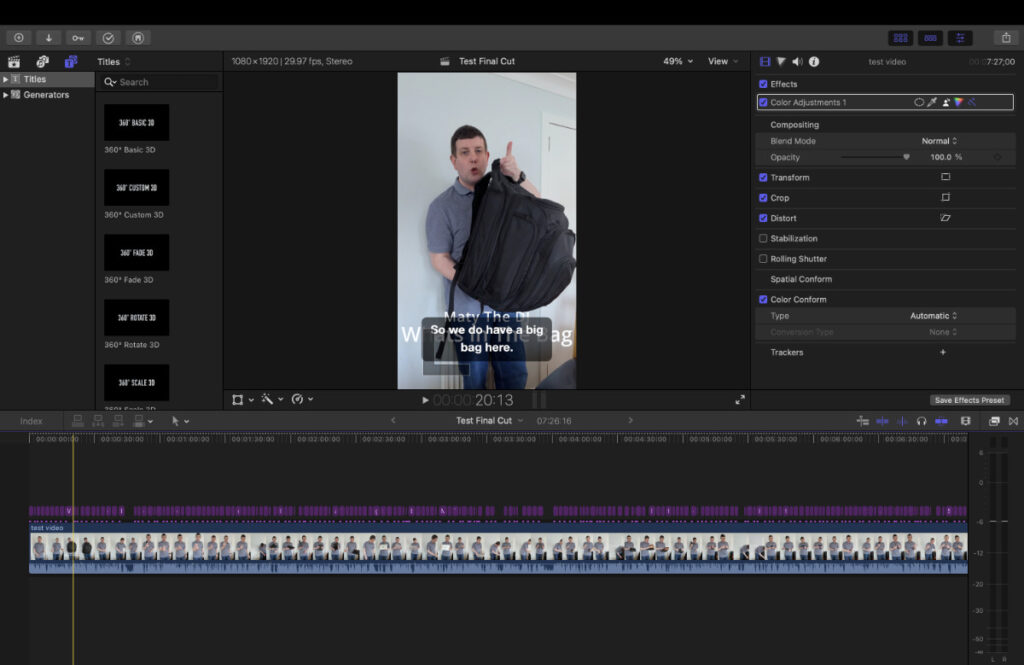
I wasn’t sure what to expect. Final Cut Pro has a reputation for being powerful but I assumed that meant complicated. What I actually found was a piece of software that felt intuitive from pretty much day one. The magnetic timeline, the way it handles colour grading, the speed of rendering, it all just clicked. I could see immediately that this was a tool built for people who take their content seriously. There was also Devince Resolve but that had a step learning curve. I needed something that was easy to learn and fast and Final Cut Pro fitted in nicely as I was using a MacBook Pro M4 for all my DJ music and business.
After a couple of weeks trialling it through Apple Creator Studio I made the decision to buy the full version at £299. Yes, it’s an investment, but as a business expense it makes complete sense. This is professional software for producing professional content that directly supports my business. Compared to the ongoing subscription costs of other editing platforms, a one-off payment for industry standard software is a no-brainer. If you’re a wedding supplier thinking about getting into video content, don’t cut corners on your editing software. Your couples deserve better than their wedding footage passing through platforms with questionable terms, and your brand deserves better than content that looks rushed or amateur.
How I Film at Weddings Without Getting in the Way
One of the biggest concerns I had before I started vlogging was how it would actually work on the night. A wedding is a carefully choreographed event with a lot of moving parts, photographers, videographers, coordinators, catering staff, and the last thing I wanted was to be that person wandering around with a camera making a nuisance of themselves.
The DJ booth is actually a brilliant vantage point. I’m elevated, I’m central, and I have a natural view of the dance floor and the room. A lot of my footage starts right there, the DJI Pocket 3 sits discreetly on my setup and I can capture the energy of the room without ever leaving the decks. Full dance floors, hands in the air, couples singing along, all of it visible from exactly where I’m supposed to be standing.
Outside of the booth I keep things quick and unobtrusive. The Pocket 3 is small enough that most guests don’t even register it. I’m not setting up shots or asking people to pose, I’m just capturing genuine moments as they happen. A quick clip of the room filling up, the wedding party arriving for the first dance, the atmosphere building as the night gets going. In and out in seconds, then back behind the decks where I belong.
Communication helps too. If I know the couple have a videographer I’ll have a quiet word early in the evening not to ask permission, just to make them aware that I’m capturing a few behind the scenes clips for my own content. In my experience suppliers appreciate the heads up and it keeps everything professional.
The key is that the vlogging never comes at the expense of the DJ set. The music, the atmosphere, the dance floor, that’s always the priority. The camera is just there to capture what’s already happening.
What I Wish I Knew Before I Started Vlogging at Weddings
Like anything new, there’s a learning curve to vlogging and I’ve made enough early mistakes to fill a blog post of their own. If you’re a wedding supplier thinking about picking up a camera for the first time, here are the honest lessons I wish someone had told me before I started.
Lighting is everything. I knew wedding venues could be dark but I underestimated just how much that would affect my footage in the early days. The DJI Pocket 3 handles low light well but it still needs something to work with. I’ve learned to pay attention to where the ambient light is coming from uplighters, fairy lights, candles and position myself to make the most of it rather than filming into darkness and hoping for the best.
Vertical or horizontal — decide before you film. This sounds obvious but it caught me out more than once early on. Footage shot vertically works brilliantly for Instagram Reels and TikTok but looks wrong on YouTube or a website. Footage shot horizontally is the opposite. I now think about where the clip is going before I press record, which saves a lot of frustration in the edit. If I shoot in horizontal then Final Cut Pro allows that to be made into Vertical for those social posts.
You won’t use most of what you film. In the beginning I was capturing everything, convinced it would all be useful. It wasn’t. A lot of early footage was too dark, too shaky, or just not interesting enough to hold anyone’s attention for more than a second. Now I’m much more selective a few quality clips beats a memory card full of average ones every time.
Audio matters more than you think. The visuals might grab someone’s attention but it’s the audio that keeps them watching. Early on I wasn’t thinking about this at all. Now I pay attention to the music in the room, the crowd noise, the energy of the moment because when it all comes together in the edit, that’s what makes a clip feel alive rather than flat.
Don’t wait until everything is perfect. This is probably the biggest one. I spent longer than I’d like to admit waiting until I felt ready ready to film, ready to edit, ready to post. The truth is you learn by doing. My early vlogs weren’t polished and that’s fine. Every edit taught me something and every clip I posted told me a little more about what worked and what didn’t. Start before you’re ready and improve as you go.
Always get consent. This one is non-negotiable. Before any footage goes anywhere near my social channels I make sure the couple are happy for me to use it. I ask it in my planning questionnaire and also its in my contract as well.
From Raw Footage to Reel-Worthy Content — Turning My Vlogs into Social Proof
All the kit, all the learning, all the late nights in Final Cut Pro it was always leading somewhere. That destination is simple: content that shows couples exactly what they’re getting when they book Marty The DJ. Not promises, not stock photos, not carefully worded testimonials actual proof. Real dance floors, real energy, real people having the time of their lives.
The footage I capture at weddings is pure gold for social media. A packed dance floor at 10pm with hands in the air and everyone singing along is worth a thousand words on a website. When a couple who are in the early stages of planning their wedding scrolls past that on Instagram or TikTok, they don’t need to be convinced they can see it for themselves. That’s the power of video content done right.
Final Cut Pro has been a game changer for turning raw clips into something worth posting. The colour grading tools let me enhance the atmosphere of the room without making it look overproduced. I can sync the cuts to the music, trim out the flat moments, and build something that feels energetic and authentic in equal measure. What started as shaky first attempts has gradually become a workflow I’m genuinely proud of.
The results have been tangible. Couples are referencing my videos when they get in touch mentioning a specific clip they saw, a particular venue, a moment that caught their eye. That tells me the content is doing exactly what it’s supposed to do. It’s not just filling up a social media grid, it’s actively bringing in enquiries from couples who already feel connected to what I do before they’ve even sent a message.
There’s also something really satisfying about it from a creative point of view. DJing has always been about creating a feeling in a room reading the crowd, building the energy, making moments happen. Vlogging is an extension of that. It’s taking those moments and giving them a life beyond the night itself. The wedding might be over but the dance floor lives on in the content, and for couples who are still planning theirs, that’s exactly what they need to see.
If you’re a wedding DJ or supplier sitting on the fence about whether vlogging is worth the investment in time, in kit, in software my honest answer is yes. The DJI Pocket 3, Final Cut Pro, and a willingness to learn have opened up a whole new side to my business. It all started with deciding to point a camera at a dance floor and see what happened. There are lots of videos on YouTube to help with all that learning. Most importantly it is give yourself time to learn and invest in yourself and your business.
Grab a camera even if it’s your phone, capture content, edit. Pratice Pratice Practice.